Lab accreditation assessors trained on measurement methods for HAB toxins
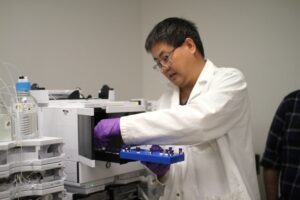
Assessors who accredit environmental laboratories in California received training on a suite of methods for measuring harmful algal bloom (HAB) toxins during a three-day workshop co-presented by SCCWRP in January.
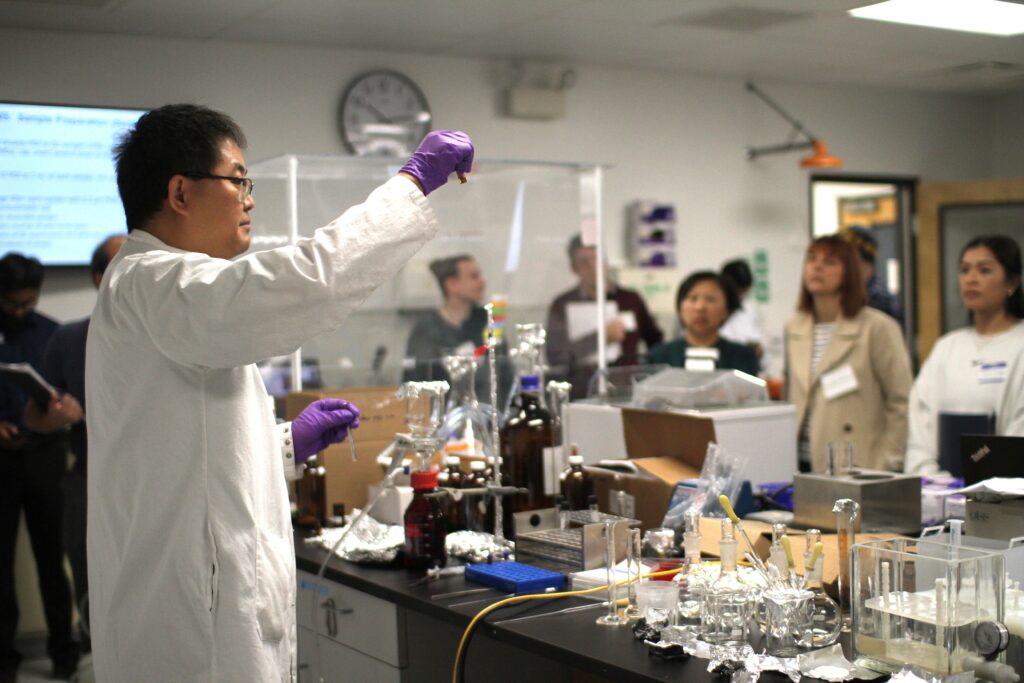
About 20 accreditors from California’s Environmental Laboratory Accreditation Program (ELAP), along with third-party assessors, attended the workshop, which included live demonstrations in SCCWRP’s laboratories on how to use four methods to measure a range of common HAB toxins.
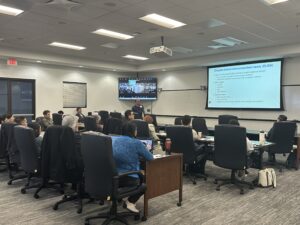
Among the methods that assessors were trained on is a newly developed method for measuring a type of HAB toxin called saxitoxins in shellfish; the California Department of Food and Agriculture is championing use of this method for seafood-safety monitoring. ELAP, which accredits all public and private laboratories that produce environmental data that get used in State decision-making processes, is considering developing a standardized process for laboratories to demonstrate proficiency measuring saxitoxins.
The workshop is part of a series of SCCWRP-led trainings for ELAP assessors that began in 2023. Past trainings focused on a suite of commonly used fish bioassay toxicity tests, methods for measuring PFAS in drinking water and environmental matrices, and the Ceriodaphnia dubia toxicity test.
More news related to: Emerging Contaminants, Eutrophication, Harmful Algal Blooms