First phase completed in OEHHA study using cell bioassays to study adverse health effects of CECs
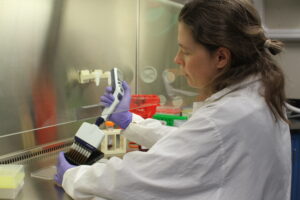
SCCWRP has successfully completed the first phase of an ongoing study with California’s Office of Environmental Health Hazard Assessment (OEHHA) that is using bioanalytical screening assays to improve understanding of the health risks associated with exposure to understudied chemicals found in consumer products.
During the study’s first phase, completed last fall, researchers generated cell bioassay data that was then used to evaluate the performance of modeling tools designed to estimate exposure risks for both humans and aquatic life.
Researchers hope the modeling tools will enable faster, more cost-effective evaluations of thousands of understudied CECs (contaminants of emerging concern) than traditional, chemical-by-chemical health risk assessments.
Cell bioassays are a laboratory-based method used to rapidly screen environmental samples and detect chemical classes that could be harmful to human and aquatic life, including chemicals found in disinfectant and personal-care products, such as per- and polyfluoroalkyl substances (PFAS).
More news related to: Bioanalytical Cell Screening Assays, Emerging Contaminants