Pilot study being developed to monitor benthic HABs in streams
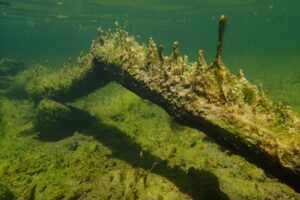
SCCWRP and the Water Boards’ Freshwater Harmful Algal Blooms (HABs) Program have begun working to develop a statewide pilot program for monitoring toxin-producing harmful algal blooms (HABs) that form along the bottom of wadeable streams, known as benthic HABs.
The benthic HABs monitoring program, which researchers began drafting a workplan for in January, represents a first-of-its-kind effort in California to more holistically evaluate benthic HABs at a statewide scale to inform management responses. The workplan will incorporate standardized best-practices benthic HAB monitoring protocols that were developed last year by the Benthic HABs Subcommittee of the California Cyanobacterial and Harmful Algal Bloom (CCHAB) Network.
Unlike planktonic HABs that grow in the water column, benthic HABs have not been as extensively monitored and studied. In California, existing HAB toxin thresholds designed to protect humans and wildlife from exposure are for water-column HABs only. Meanwhile, because benthic HABs tend to form as mats, researchers believe humans and wildlife can be exposed to benthic HABs in more uneven and unpredictable ways (i.e., when pieces of the mat suddenly break off and become suspended in the water column).
Pilot monitoring is planned for this summer. To participate in the pilot monitoring study, contact Dr. Jayme Smith.
More news related to: Eutrophication, Harmful Algal Blooms