Passive samplers deployed to measure DDT in sediment at offshore dump sites
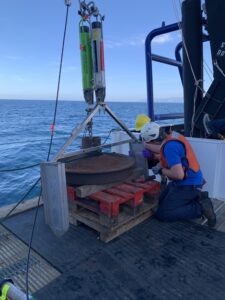
Metal spears, above, are integrated into the design of passive sampling devices to ensure the devices, upon being deployed, will stay anchored to the seafloor. Passive sampling technology, which uses a thin membrane film, was recently deployed at a former industrial waste dump site in the San Pedro Basin to measure how much of the pesticide DDT is diffusing out of seafloor sediment and re-entering the water column.
SCCWRP and the Scripps Institution of Oceanography have initiated a second deployment of passive samplers to measure levels of the pesticide DDT diffusing out of seafloor sediment at a former offshore industrial waste dump site – the second such deployment to better understand the ecological risks posed by this decades-old contamination.
The passive samplers, deployed in April at the former San Pedro Basin dump site, are measuring contamination levels in the water between sediment particles – known as sediment porewater – which will help researchers develop models that can estimate the levels of contamination re-entering the water column over time. This chemical contamination, which became attached to sediment particles decades ago, is gradually diffusing back into the water column.
Located between the mainland and Catalina Island, the DDT dump site received thousands of barrels and bulk waste from the former Montrose Chemical Corporation in Los Angeles County, which was at the time the largest DDT manufacturer in the nation.
Passive sampling devices consist of thin membrane films that can detect low levels of contaminants in surface layers of sediment that dissolve into the water column. To support the deployment, SCCWRP helped develop metal spears that are affixed to the underside of the passive sampling instrument. Upon making contact with the seafloor, the spears pierce through the sediment, ensuring the passive samplers will remain anchored in place for the duration of the eight-month deployment.
More news related to: Emerging Contaminants, Sediment Quality