Novel eDNA method developed to detect threatened fish species in Southern California streams
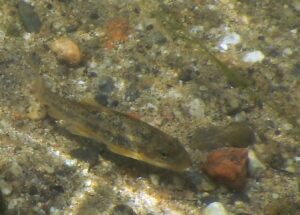
SCCWRP and its partners have developed a novel method for detecting the Santa Ana sucker in Southern California streams using environmental DNA (eDNA) – a noninvasive approach that managers hope can help inform conservation strategies for the threatened freshwater fish species.
The species-specific assay, which was developed in February, uses the digital polymerase chain reaction (dPCR) method to detect the presence of the Santa Ana sucker at low concentrations. eDNA offers a promising, rapid alternative to traditional field collection and identification of species, enabling earlier detection of a range of invasive, threatened and difficult-to observe species.
The Santa Ana sucker, a freshwater species native only to the Los Angeles and Santa Ana River basins, is sensitive to changes in flow patterns and has experienced population declines in recent years.
SCCWRP, in partnership with the San Bernardino Municipal Water District and the Riverside Corona Resource Conservation District, successfully validated the method by testing it against multiple fish species to ensure that the assay can distinguish the Santa Ana sucker from other species.
More news related to: Bioassessment, DNA Barcoding