Working right outside neighbors’ front doors
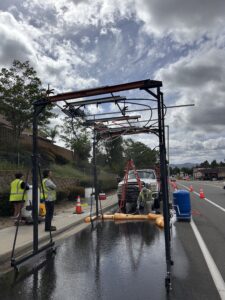
Much of SCCWRP’s research takes place in laboratories and at field sites removed from where people live and work. But in the case of a study that is measuring the efficiency of routine street sweeping in removing contaminants that would otherwise enter storm drains and contribute to runoff pollution, sometimes this work takes place in the middle of residential neighborhoods.
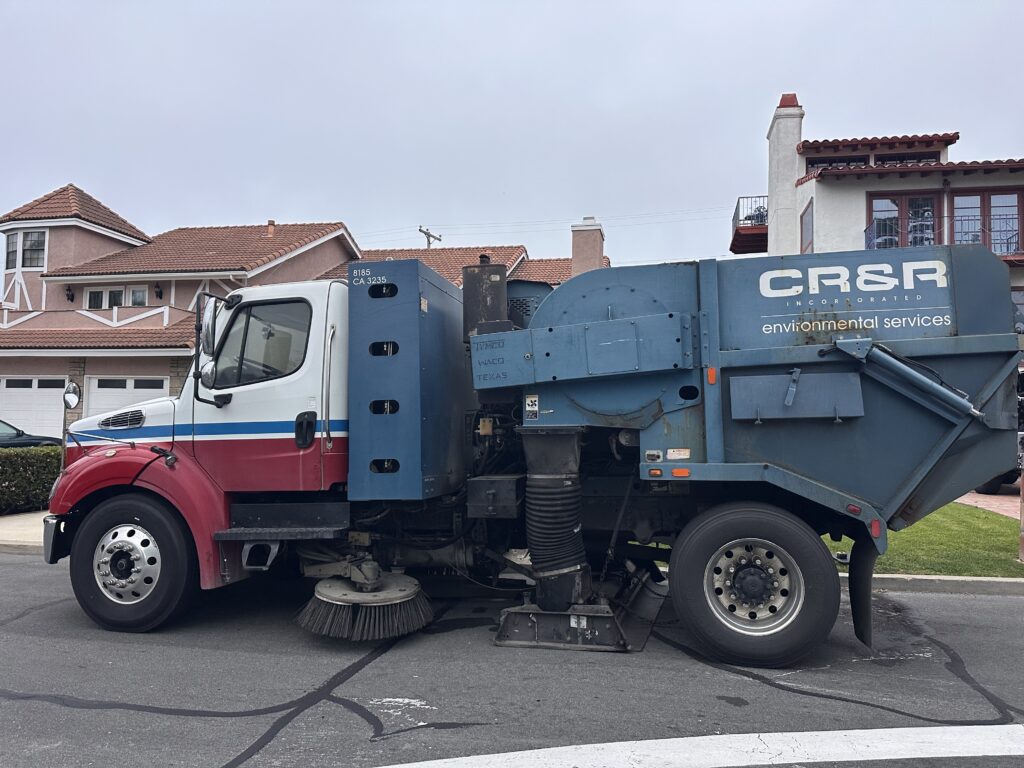
For the ongoing SCCWRP street sweeping study, researchers are using a custom-built rainfall generator to simulate repeatable, controlled wet-weather conditions across swept and upswept street segments at 10 sites across Southern California, including in some residential neighborhoods. The sites are being swept with either mechanical broom sweepers or regenerative air sweepers, which also will enable researchers to compare the performance of two different street-sweeping technologies.
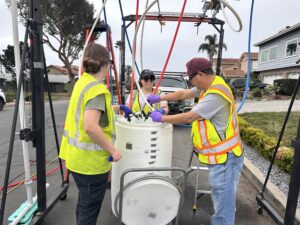
Street sweeping is a widely implemented non-structural best management practice (BMP) in stormwater programs. What has historically been unclear, however, is what portion of stormwater pollutants – sediment, nutrients, trace heavy metals, microplastics and bacteria – are removed from roadways during street sweeping.
More news related to: Runoff Water Quality, Stormwater BMPs