First round of field testing completed for study quantifying runoff benefits of drip-irrigated landscapes
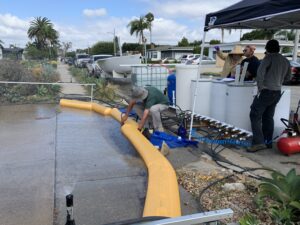
SCCWRP and the County of San Diego have completed the first round of field testing for a study measuring how much irrigation water and rainfall soaks into the ground vs. becomes runoff in residential areas – an ongoing effort that could transform Southern California’s understanding of the runoff benefits associated with replacing traditional spray-irrigated turf with drip-irrigated, drought-tolerant landscaping.
During the initial round of field testing, completed in January, researchers used a new rainfall generator custom-built by SCCWRP to quantify the ratio of water that soaks into the ground vs. runs off the land – known as the runoff coefficient – across impermeable surfaces (e.g., concrete driveways), one of the three main types of residential land covers being investigated. The other two land cover types, which researchers already have begun field testing on, are grass turf lawns and drip-irrigated, drought tolerant landscapes.
Historically, managers have relied on decades-old runoff coefficients published in reference textbooks and practitioner manuals to estimate runoff volumes from turf lawns and impermeable surfaces, and there are no published values at all for drip-irrigated landscaping because it is a relatively new type of land cover.
Turf replacement projects are considered a type of non-structural stormwater BMP (best management practice) because they can reduce the volumes of irrigation and wet-weather runoff entering storm drains.
More news related to: Runoff Water Quality, Stormwater BMPs