Intertidal bioblitz completed to expand DNA libraries
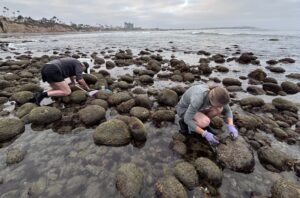
SCCWRP and its partners have completed the first large-scale field sampling event supporting an ongoing effort to build a comprehensive library of genetic identifying information for thousands of species in California’s coastal intertidal areas – a major statewide investment that will pave the way for robust, ongoing DNA-based monitoring in these ecologically diverse habitats.
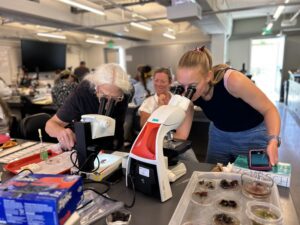
The two-week “bioblitz” sampling event, which wrapped up in early July, spanned Oceanside to Imperial Beach in San Diego County, bringing together more than 45 taxonomists and other researchers to collect, identify, voucher, process and archive more than 7,000 specimens representing about 1,600 fish, invertebrates and algae species.
Among the species identified by taxonomists were hundreds of species that either have not been previously observed in California or appear to be new to science. Once the collected samples are identified using DNA-based methods, researchers expect the number of known intertidal species in California – currently estimated at around 4,000 – could jump by hundreds, if not thousands.
The California Intertidal Biodiversity DNA Barcode Library project, a SCCWRP-facilitated project supported by the California Ocean Protection Council, is the first large-scale, coordinated effort within California to generate comprehensive genetic identifying information for thousands of species across a single aquatic habitat type.
Researchers expect the project to serve as a template for how to coordinate and build comprehensive DNA reference libraries for other habitat types in the future.
As traditional, manual identification of aquatic organisms by trained taxonomists is increasingly replaced by – or performed in tandem with – rapid, DNA-based identification methods, environmental managers rely on DNA reference libraries to identify the species they are monitoring.
Although this information has already been published for some species, and although these libraries are continually expanding, DNA reference libraries remain incomplete and uneven across species and habitats, limiting managers’ ability to use DNA-based methods to monitor all species of interest.
The limitation is particularly constraining when managers are monitoring organisms via the DNA they shed into their environment, known as environmental DNA (eDNA). eDNA monitoring makes it possible to cast a wide net, but in the absence of DNA reference libraries for every species of interest, many other organisms go routinely undetected.
Intertidal habitats are the narrow area of the coastline that alternates between being submerged at high tide and exposed at low tide. These areas are among the most vulnerable coastal habitats to the intensifying effects of climate change, including rising water temperatures and sea levels.
During the bioblitz, participants used standardized workflows and methods to collect and process specimens across 23 intertidal sites, including sandy beaches, estuaries, rocky shores, harbors and marinas.
Most of the collected specimens will undergo DNA barcoding to generate a species-specific genetic identifier, with further in-depth genome sequencing planned on a representative subset. Meanwhile, specimens already have been photographed, preserved and archived at multiple repositories for future use.
Over the next two years, researchers plan to hold about five more bioblitzes along the California coast; the next one is planned for mid-August in Eureka.
For more information, contact Dr. Susanna Theroux.
More news related to: Bioassessment, DNA Barcoding, Top News