Effort launched to use eDNA-based methods to inform golden mussel monitoring in water spreading ground
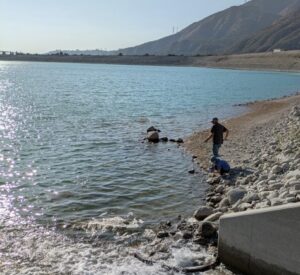
SCCWRP and its partners have launched an effort to use environmental DNA (eDNA)-based monitoring methods to improve early detection of an invasive freshwater mussel species in water supply systems – insights that could help managers decide where to direct their limited traditional monitoring resources.
The project, which kicked off in September at a water spreading ground facility in Azusa, involves using the DNA that organisms shed into their environment, known as eDNA, to screen for early signs of the presence of golden mussel. The eDNA monitoring data, in turn, could help managers decide where to deploy plankton net tows and settlement plates, as well as where to conduct microscopic examinations.
Golden mussel is a highly invasive freshwater species that has been found in more than a dozen water bodies across California since being discovered in the San Francisco Bay Delta in 2024. It is especially a threat in reservoirs because it can clog pipes and pumps, and it spreads easily through California’s water delivery systems.
More news related to: Bioassessment, DNA Barcoding