Bight ’23 Sediment Quality element reflects modernized, expanded regional monitoring
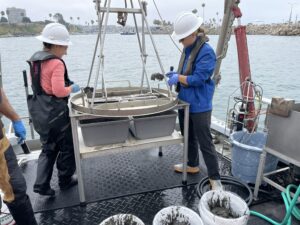
The Southern California Bight 2023 Regional Monitoring Program’s Sediment Quality study element has completed its seventh assessment of how sediment contamination has affected the health of Southern California’s coastal marine ecosystems – generating comprehensive, comparable sediment quality data sets that now span three decades, while simultaneously expanding and modernizing the program’s assessment tools and approach.
The Bight ’23 Sediment Quality assessment, published in June as a web-based StoryMap synthesis report instead of a traditional printed document, represents the most integrated, interactive Sediment Quality assessment that the SCCWRP-facilitated Bight program has completed to date. High-level, region-wide data syntheses have been seamlessly linked to underlying raw and analyzed data sets that encompass multiple lines of evidence, enabling custom data querying and deep dives into specific sites of interest.
The Sediment Quality study element draws from five lines of evidence – sediment toxicity, sediment chemistry, benthic infauna, bottom-dwelling fish and invertebrate communities and shellfish contaminant bioaccumulation – to generate an overall assessment narrative of sediment health. The first three lines of evidence also are synthesized to generate a quantitative assessment of Bight sediment quality.
Meanwhile, the Bight program has grown far beyond the original Sediment Quality study element, to also encompass six additional Bight ’23 study elements probing other aspects of coastal ecosystem health, including ongoing studies assessing microplastics contamination in shellfish and the health of eelgrass beds. Meanwhile, the Bight program also leverages the sediment sampling effort to collect samples supporting analyses of how trash is spreading across the coastal seafloor.
Significantly, the Bight program’s expansion and modernization efforts have not compromised its ability to continue generating high-quality, comparable data sets on sediment quality – data sets that can be used to probe regional trends across space and time.
The Bight ’23 Sediment Quality study element’s overall conclusion is that contamination levels remain low across the vast majority of Southern California’s coastal sediment seafloor, with 99% of these areas considered unimpacted by sediment contamination. However, Bight ’23 also found that coastal embayments, especially estuaries and marinas, continue to be disproportionately impacted by sediment contamination, with little regional improvement over the past 15 years.
Based on the Bight ’23 findings for embayments, SCCWRP member agencies already have begun discussing how to pursue regional causal assessment investigations in embayments; the goal would be to understand if embayment sediment quality is being affected by a common set of regional stressors or if the stressors are water body-specific.
The Bight ’23 Sediment Quality study element reflects significant investments in data management to improve the accessibility of both current and historic Bight data. New web-based Bight data analysis and visualization tools enable users to interact with data sets of their choosing, including reviewing data from Bight monitoring cycles dating back to 1994. Finally, Bight ’23 converted a suite of legacy, spreadsheet-based tools to a single, integrated R package to calculate individual and integrated assessment scores.
In summer 2027, Bight ’23 is expected to complete an integrated human health risk assessment based on consumption of contaminated shellfish. Researchers are examining the relative risk levels posed by three different classes of contaminants – human pathogens, HAB (harmful algal bloom) toxins and chemical pollutants – with a goal to understand how multiple stressors may be combining to magnify overall risk.
SCCWRP and its member agencies already are beginning conversations about Bight ’28, which will be the program’s eighth five-year cycle; Bight ’28 will officially kick off with a fall 2027 planning workshop at SCCWRP. One of the key focuses will be exploring how to better integrate the Bight program with other marine monitoring programs and inland Southern California monitoring programs.
For more information, contact Dr. Alvina Mehinto.
More news related to: Regional Monitoring, Sediment Quality, Southern California Bight Regional Monitoring Program, Top News