Regional monitoring program approved for coastal wetlands
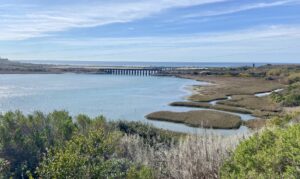
SCCWRP and its partners have received unanimous management approval to begin implementing a new regional monitoring program for comprehensively assessing the health of Southern California’s coastal wetlands – an endorsement that paves the way for managers to use standardized methods to collect directly comparable data for the region’s approximately 100 wetlands.
The Southern California Coastal Wetland Regional Monitoring Program – which was unanimously endorsed in December by 18 local, State and federal management agencies that make up the governing board of the Southern California Wetlands Recovery Project – is the culmination of a five-year effort to design, build and pilot-test the program.
The new program seamlessly integrates with both the Southern California Bight Regional Monitoring Program and California Estuarine Marine Protected Areas (EMPA) Monitoring Program.
Already, multiple agencies have committed to begin incorporating elements of the monitoring program into their regulatory and grant requirements, and assisting in coordinating monitoring efforts. Meanwhile, the upcoming 2028 cycle of the Southern California Bight Regional Monitoring Program (Bight ’28) is expected to collect the first regional-scale data sets for the newly launched program.
The program’s wetland monitoring protocols were developed over the past few years for the statewide EMPA program, which is in the final stages of development. The protocols were then pilot-tested through the Bight ’23 Estuaries study element. Researchers’ long-term goal is for other regions of California to adopt the structure of the Southern California Coastal Wetland Regional Monitoring Program, thereby forming a statewide program encompassing all wetlands in California, not just the subset of wetlands that are designated EMPAs (where there is already overlap).
California has spent more than $600 million over the past two decades to protect and preserve wetlands, but these efforts have largely been site-specific and siloed, with managers lacking rigorous assessment tools and a unified monitoring program to evaluate the effectiveness of management interventions. Agencies that monitor coastal wetlands traditionally have used their own methods and approaches to collect data on wetland extent, abundance, and condition, resulting in inconsistent data stored in multiple locations – and limiting managers’ ability to understand how these systems have been affected by climate change and local human activities.
The monitoring program uses a standardized assessment approach that focuses on the ecological functioning of estuaries. Although this approach is advantageous in that it is directly tied to the beneficial-use goals that estuary managers are working to protect, it also is more complex and laborious to implement than traditional monitoring approaches, which rely on simpler measures of ecosystem condition like the wetland monitoring approach codified into the California Rapid Assessment Method (CRAM).
At the same time, the new monitoring program is modular in its design, giving participants flexibility to decide which aspects of wetland health they will monitor and how intensely – while simultaneously enabling disparate data sets to be stitched together to paint an overall picture of wetland health. The regional data sets also will enable researchers to determine the relative success of different wetland restoration projects across Southern California.
Core to the monitoring program’s design is a 37-site sentinel site network – unveiled in 2024 – that serves as the equivalent of the program’s reference sites, which are sites that monitored sites can be compared to. While some of the network’s sites are actual reference sites, others are recently restored sites – reflecting the fact that few Southern California wetland sites are in reference condition due to ecological degradation.
Coastal wetlands play a critical role at the land-sea interface, helping to buffer against coastal flooding, filter and retain contaminants, and provide critical habitat for vulnerable plant and animal communities.
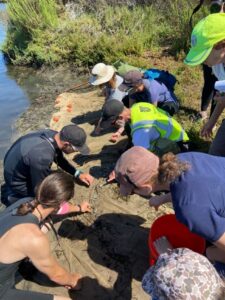
Since the mid-1800s, more than half of Southern California’s coastal wetlands have been lost as a result of intensive human development. A 2017 analysis by SCCWRP and its partners found that about half of the region’s remaining wetlands are expected to become permanently submerged by 2100 as a result of sea level rise.
But the news is not all bad: If Southern California were to realign levees, roads and other infrastructure, the region has the potential to experience a net gain of up to 4,800 acres of wetlands.
In 2018, the Southern California Wetlands Recovery Project – a consortium of seven State agencies, five federal agencies, and six local agencies – developed a master, long-term strategy calling on the region’s wetlands to be managed as an interconnected, interdependent network, and to build capacity to conduct regional assessments of wetland health.
The development of the Southern California Coastal Wetland Regional Monitoring Program consists of four major components, which are described in four guidance documents: Sentinel site network, Monitoring strategy, Agency-specific guidelines and Implementation strategy.
For more information, contact Dr. Jan Walker.
More news related to: Climate Change, Regional Monitoring, Sea Level Rise, Top News