Second round of field sampling launched to quantify street sweeping’s effect on runoff water quality
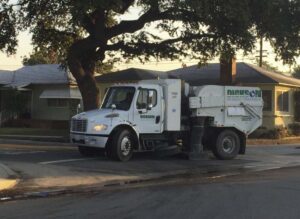
SCCWRP and its partners have launched a second phase of field sampling for an ongoing study working to measure the influence of routine street sweeping in removing pollutants that would otherwise enter storm drains and contribute to runoff pollution.
The second phase, which kicked off in September targeting 10 sites across the Upper San Gabriel River and Rio Hondo watersheds, builds on an initial round of field sampling completed across Southern California last summer to build regional-scale understanding of street sweeping’s effects on runoff water quality.
The more intensive sampling effort within a smaller geographic area will improve statistical confidence in the regional-scale study; the data also will be used by the Los Angeles County consultant Craftwater Engineering to calibrate watershed modeling tools intended to predict where and how to deploy street sweeping and other non-structural BMPs (best management practices) to maximize runoff water-quality benefits.
The study involves comparing levels of runoff pollution that have been collected from pairs of roadway segments, where one segment has been swept and the other segment has deliberately not been swept.
Street sweeping is a type of non-structural BMP that is a routine part of stormwater management programs in communities across Southern California, but what has historically been unclear is what portion of stormwater pollutants – sediment, nutrients, trace organics and heavy metals, microplastics and bacteria – are removed from roadways via street sweeping.
More news related to: Runoff Water Quality, Stormwater BMPs