Short-term strategies identified for controlling HABs in California coastal waters
An expert working group of researchers and environmental managers that was tasked with reviewing short-term strategies for controlling and mitigating harmful algal blooms (HABs) in marine environments has identified multiple approaches that California should prioritize implementing over the next five years, including expanded field monitoring programs, improved modeling tools for forecasting HABs, and bolstered capacity to respond to mass wildlife poisoning events.
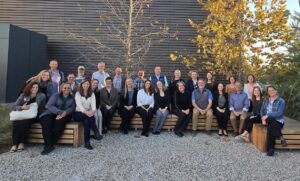
In a technical report published in January, the 21-member working group provided its assessment of multiple types of potentially effective short-term HAB control and mitigation strategies, as well as those that are unlikely to be effective or viable to implement in California coastal waters. The working group formulated its recommendations during a two-day workshop in January facilitated by SCCWRP and held at the Orange County Sanitation District.
HAB management along California’s coast has traditionally focused on long-term prevention measures, especially reducing discharges of land-based nutrient sources that can exacerbate blooms. But as HABs increase in frequency and severity due to changing environmental conditions, including climate change, the California Ocean Protection Council asked SCCWRP to bring together an expert working group to evaluate HAB control options that could provide relief on shorter time horizons.
Among the promising shorter-term solutions that the working group recommended exploring is co-cultivation of shellfish and seaweed farms. Shellfish like oysters and mussels are filter feeders that consume tiny particles in the water column, including the phytoplankton species that cause HAB events, while seaweed plants could use up nutrients, draw down dissolved carbon dioxide levels, and release compounds that inhibit algal growth. The group recommended investigating the effectiveness and feasibility of implementing these aquaculture practices at scale in coastal waters to mitigate coastal bloom events.
Simultaneously, the group ruled out a number of other emerging biological, physical and chemical HAB control technologies. These technologies are designed to destroy HAB cells and/or their toxins, physically remove cells or toxins from aquatic systems, or limit cell growth and proliferation. The group concluded that many of these emerging technologies would require substantial efficacy testing; the technologies also have not been vetted for potential unintended ecological damage, and likely are logistically or economically impractical to implement at sufficiently large scales. For example, some short-term HAB control strategies involve spraying chemicals over the water surface to inhibit algal growth.
In recent years, major bloom events along California’s coast have disrupted the fishing and shellfish industries, as well as stranded thousands of marine mammals en masse at beaches as a result of poisoning by domoic acid, which is the toxin produced by a ubiquitous type of HAB known as Pseudo-nitzschia.
The working group focused most of its recommendations on improving managers’ ability to track bloom patterns in coastal waters – both via expanded HAB field monitoring programs and via enhanced HAB forecasting tools.
The group also recommended enhancing existing mitigation strategies that focus on minimizing the effects of HABs on both wildlife and commercial and recreational fisheries, including by bolstering resources for wildlife rehabilitation centers that routinely respond to mass coastal strandings of poisoned marine mammals, and expanding public health infrastructure to prevent people from inadvertently consuming seafood contaminated with HAB toxins.
The California Ocean Protection Council intends to use the workshop’s recommendations as a community resource for guiding investments in California’s coastal HAB management strategies going forward.
For more information, contact Dr. Jayme Smith.
More news related to: Eutrophication, Harmful Algal Blooms, Top News